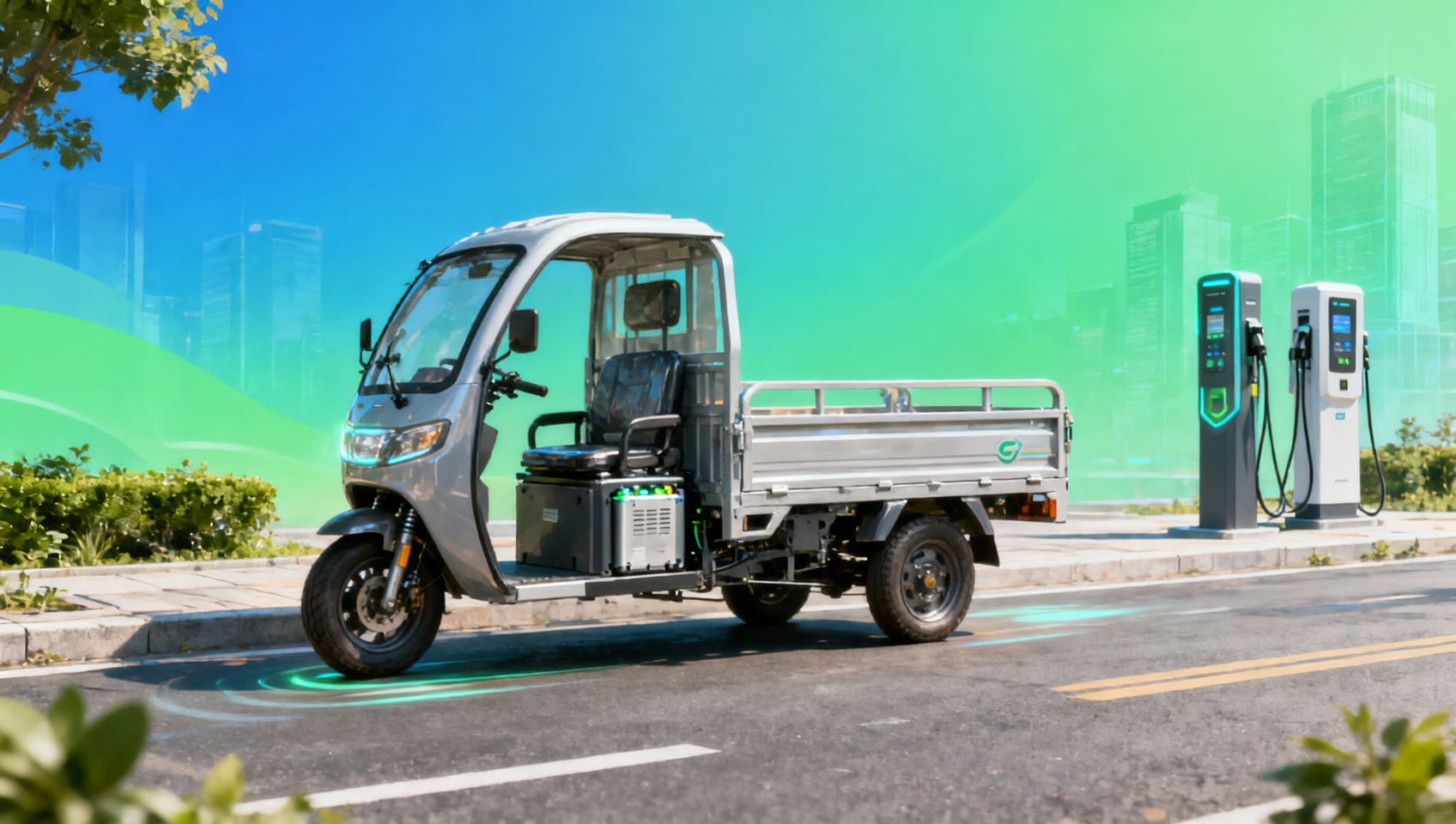
For city riders comparing practical mobility options, one question matters most: Urban Commuting Electric Tricycle range. Range affects daily reliability, charging frequency, and overall cost of ownership. Whether you use an electric tricycle for work, shopping, or short-distance transport, understanding how far it can actually go helps you choose the right model and avoid range anxiety in real urban conditions.
What does urban commuting electric tricycle range really mean?
In the new energy mobility sector, range is not a single fixed number. For an urban commuting electric tricycle, it is the practical distance the vehicle can cover on one full charge under real city conditions. That includes stop-and-go traffic, rider weight, cargo load, road gradient, tire pressure, battery age, and ambient temperature. A brochure may show one figure, but a buyer should always ask for a realistic operating range, not only a laboratory estimate.
For most city-use electric tricycles, a common working range often falls within a broad band such as 30 km to 90 km per charge, depending on battery type, motor power, controller calibration, and load profile. Lighter passenger models used for neighborhood travel usually sit at the lower-to-middle end of that range. Delivery or utility tricycles with larger battery packs may reach higher figures, but only when speed and payload are managed properly.
This matters because urban commuting is usually repetitive. A rider may travel 8 km to 15 km per day, while a small business operator may cover 25 km to 50 km with multiple stops. If the tricycle’s effective range is too close to daily demand, battery stress increases and charging frequency rises. Over time, that affects uptime, planning, and total operating cost more than the headline range number suggests.
Why quoted range and real-world range are often different
Manufacturers and buyers often talk past each other because they use different assumptions. Quoted range may be based on flat roads, moderate speed, light load, new battery condition, and stable temperatures around 20°C to 25°C. Real urban use is harsher. Frequent braking, acceleration, rough pavement, and traffic signals all reduce efficiency. A buyer who understands this gap can evaluate electric tricycle performance more accurately and avoid unsuitable procurement decisions.
- Battery capacity is the starting point, but usable energy depends on system efficiency and discharge behavior.
- Motor wattage affects torque and climbing ability, yet higher power can shorten range if speed habits are aggressive.
- Payload changes everything. An extra 50 kg to 150 kg can materially reduce distance per charge in dense city conditions.
- Temperature below 10°C or above 35°C can influence battery performance and practical commuting distance.
How far can it go in different urban use scenarios?
The most useful way to judge electric tricycle range is by scenario, not by advertising language. A household rider going to markets, schools, and nearby services will use the vehicle differently from a courier, property management team, or street-vendor operator. The same battery pack can perform very differently across these patterns because idle time, restart frequency, and payload intensity are not the same.
In light urban commuting, where trips are short and average speed stays moderate, a practical range of 40 km to 70 km is often sufficient for 2 to 4 days of use before recharging. In commercial service, especially with repeated stops and partial loading, users usually need a larger energy buffer. A daily target of 50 km to 80 km is more realistic if the tricycle supports delivery, facility transport, or neighborhood logistics.
Buyers in the new energy industry should also think in terms of reserve capacity. A safe procurement rule is to select an electric tricycle whose realistic range is at least 20% to 30% above the normal daily route length. This buffer helps cover detours, weather changes, battery aging, and temporary overloads without forcing emergency charging during working hours.
Typical range by city scenario
The table below gives a practical way to compare urban commuting electric tricycle range across common usage patterns. These are general industry reference ranges, not fixed promises, and actual results depend on configuration and operation.
This comparison shows why the same electric tricycle cannot be recommended for every city rider. If the use case is personal and low-load, a compact battery system may be enough. If the tricycle is part of a work routine, buyers should emphasize range stability under repeated starts, cargo variation, and longer operating windows instead of chasing the cheapest initial price.
Scenario-based checks before buying
- Map your average route for 7 consecutive days instead of guessing from memory.
- Estimate typical payload in three states: empty, normal, and peak load.
- Check whether midday charging is available or whether the tricycle must last a full shift.
- Ask whether the range claim is based on lithium battery or lead-acid battery configuration.
Which technical factors have the biggest impact on range?
If you want to compare electric tricycle range professionally, start with the battery system. Battery chemistry, nominal voltage, amp-hour rating, and battery management all influence usable energy. In many urban models, buyers will encounter lead-acid and lithium options. Lead-acid usually has a lower upfront price, while lithium typically offers lower weight, better cycle performance, and more stable output over repeated urban charging patterns.
Motor and controller matching is the second key factor. A 500 W to 1000 W setup may be suitable for lighter commuting use, while cargo-oriented urban tricycles may use stronger systems. More power does not automatically mean better range. If the controller encourages aggressive acceleration or if the rider regularly uses top speed, energy consumption rises quickly. Good system tuning balances torque, cruising efficiency, and battery draw.
Vehicle design also matters. A heavier frame, wider tires, poor tire pressure, misaligned brakes, or frequent hill starts can all shorten range. In crowded city routes, stop frequency can be a hidden energy cost. A tricycle doing 30 starts and stops in 10 km may consume meaningfully more energy than one traveling the same distance on smoother roads. That is why experienced buyers ask for operating-condition details, not just battery size.
Battery and configuration comparison for urban commuting
The table below compares common configuration choices that influence electric tricycle range in urban use. It helps procurement teams and individual buyers understand trade-offs between price, weight, charging habits, and daily usability.
For buyers who need consistent daily mobility, the practical takeaway is simple: range comes from system matching, not one isolated component. A well-configured urban commuting electric tricycle with sensible speed control and an appropriate battery pack often outperforms a poorly matched higher-power model in real city work.
Three technical questions worth asking suppliers
- What is the estimated real-use range at normal city speed with a defined rider or cargo load?
- How long is the typical charging cycle, and what is the recommended daily charging routine?
- How does the battery option affect replacement cost, vehicle weight, and long-term operating economics over 12 to 24 months?
How should buyers choose the right range for procurement and fleet planning?
For B2B users and serious individual buyers, the smartest decision is not to buy the longest-range electric tricycle available. It is to buy the right-range model for your operating profile. Overspecification increases upfront cost and may add unnecessary battery weight. Underspecification causes downtime, charging interruptions, and faster battery wear. Procurement should therefore be based on route data, duty cycle, and acceptable charging intervals.
A practical selection method uses 4 steps. First, record average daily distance over at least 5 to 7 working days. Second, identify peak distance days and maximum load days separately. Third, decide whether charging happens once per day or between shifts. Fourth, add a realistic safety buffer of 20% to 30%. This process is especially useful for property services, last-mile delivery, campus transport, and community retail mobility.
In the new energy sector, procurement teams also need to account for battery aging. A vehicle that meets your route on day one may feel inadequate after extended usage if there was no reserve built in. This is why experienced buyers focus on usable range over time, charging convenience, and replacement planning rather than treating the purchase as a one-time hardware decision.
Range selection guide by buyer type
Use the following table as a quick procurement framework when comparing urban commuting electric tricycle options across different operational needs.
The key insight is that procurement decisions should connect range, charging rhythm, and workload. When suppliers can help confirm route conditions, battery options, and delivery timing up front, buyers reduce risk and improve the chance of selecting a tricycle that remains practical after months of real operation.
Five procurement checkpoints that prevent wrong purchases
- Confirm whether the quoted range is empty-load, single-rider, or cargo-use based.
- Check the expected charging time and whether your site power conditions support it.
- Ask for recommendations based on flat-city use versus mixed-gradient routes.
- Compare battery replacement planning as part of total ownership cost, not after purchase.
- Review local traffic and compliance requirements before finalizing a model for public-road operation.
What are the common mistakes and how can users extend real-world range?
A common mistake is to buy based only on the largest battery claim. In practice, range depends on how the electric tricycle is used every day. A poorly maintained vehicle with low tire pressure, overloaded cargo, and frequent high-speed starts may perform far below expectations. Another mistake is ignoring route structure. A 40 km route with constant stopping can be more demanding than a smoother 55 km route.
Users also underestimate the effect of battery care. Repeated deep discharge, irregular charging, or long-term storage without maintenance can reduce effective range over time. For urban commuting electric tricycles used every day, a stable charging routine often matters more than occasional long trips. Basic maintenance checks every month and a more detailed inspection every quarter help preserve reliable performance.
If you want to improve practical range without changing the whole vehicle, focus on operating habits first. Moderate acceleration, sensible cruising speed, proper tire inflation, controlled load, and timely brake adjustment can produce noticeable improvements. In city logistics use, route planning can also help. Grouping deliveries by zone and reducing repeated detours often cuts energy use more effectively than simply choosing a larger battery pack.
FAQ: Range concerns buyers ask most often
How much range buffer should I keep for daily commuting?
A practical target is 20% to 30% above your normal daily route. If your city use is around 30 km per day, a tricycle with a realistic 40 km to 45 km operating range is usually safer than a model rated exactly at 30 km. This reduces charging stress and leaves room for weather, traffic, and battery aging.
Is lithium always better than lead-acid for urban commuting electric tricycles?
Not always. Lithium is often preferred for lighter weight, cycle performance, and efficiency, especially for frequent-use new energy vehicles. However, lead-acid may still suit lower-budget, shorter-distance applications. The right choice depends on daily mileage, replacement planning, charging frequency, and whether reduced vehicle weight is important to your route.
How often should I charge an electric tricycle used in the city?
That depends on battery type and daily use intensity. For many commuters, once per day or once every 2 to 3 days may be enough. For commercial users running multiple stops and heavier loads, daily charging is common. Follow the battery supplier’s guidance and avoid turning charging into an emergency habit after the pack is deeply depleted.
Can payload reduce range significantly?
Yes. Payload is one of the biggest real-world variables. Even within the same city route, moving from light personal use to regular cargo carrying can reduce effective range materially. This is why commercial buyers should request range estimates for loaded operation, not only empty-vehicle testing conditions.
Why choose a supplier that helps with range matching, configuration, and delivery planning?
In new energy mobility procurement, the real value is not simply selling an electric tricycle. It is helping buyers match the right battery, motor, load capacity, and charging rhythm to an actual urban use case. That is where many purchases succeed or fail. When the supplier understands commuting distance, route density, delivery workload, and local operating constraints, the final recommendation becomes more practical and more cost-efficient.
A professional consultation process should cover at least 4 key areas: route confirmation, battery option comparison, expected charging schedule, and delivery timing. For fleet or repeat orders, buyers should also ask about spare parts planning, service support, and configuration consistency across batches. These points are especially important when the tricycle is part of daily business operations rather than occasional personal travel.
If you are comparing urban commuting electric tricycle options, you can contact us for specific support on practical range assessment, battery configuration, model selection, delivery lead time, and application-based recommendations. We can also discuss custom requirements such as city delivery use, community transport, lightweight cargo needs, and charging strategy based on your daily operating pattern.
What you can consult before placing an order
- Practical range confirmation based on your daily route, expected speed, and load profile.
- Battery selection advice for lithium versus lead-acid under different budget and usage cycles.
- Model matching for household commuting, small business transport, or fleet procurement.
- Typical delivery cycle, sample support, and quotation discussion for planned purchase volumes.
- Compliance and application guidance for local road use, commercial operation, or institutional deployment.
If your goal is to buy an electric tricycle that can truly handle city work without wasting budget, start with the right questions. Share your daily distance, cargo type, charging conditions, and preferred delivery timeline. With that information, it becomes much easier to identify a suitable range target and build a solution that fits both present use and future operating demands.


 Factory Inspection Conducted to Review Production and New Product Development
 What Is an Electric Mobility Scooter and Who Is It Best Suited For?Electric Mobility Scooter explained: learn who it suits best, how battery systems affect daily use, and what to check before buying for safer, easier independent mobility.
 What are the trade-offs of choosing an enclosed electric tricycle?Is Enclosed Electric Tricycle worth the extra cost? Discover the real trade-offs in comfort, range, maintenance, and safety to choose the best new energy solution.
 What are the trade-offs of choosing an enclosed electric tricycle?Is Enclosed Electric Tricycle worth the extra cost? Discover the real trade-offs in comfort, range, maintenance, and safety to choose the best new energy solution.
 How Far Can an Urban Commuting Electric Tricycle Go?Urban Commuting Electric Tricycle range explained: discover real-world续航, key factors, and practical tips to choose the right model for city travel, delivery, and lower operating costs.
 Is an Enclosed Electric Tricycle Worth Buying for Winter?Is Enclosed Electric Tricycle worth buying for winter? Discover how battery range, safety, comfort, and ROI affect winter mobility, and choose the right model for commuting or delivery.


Chat Online